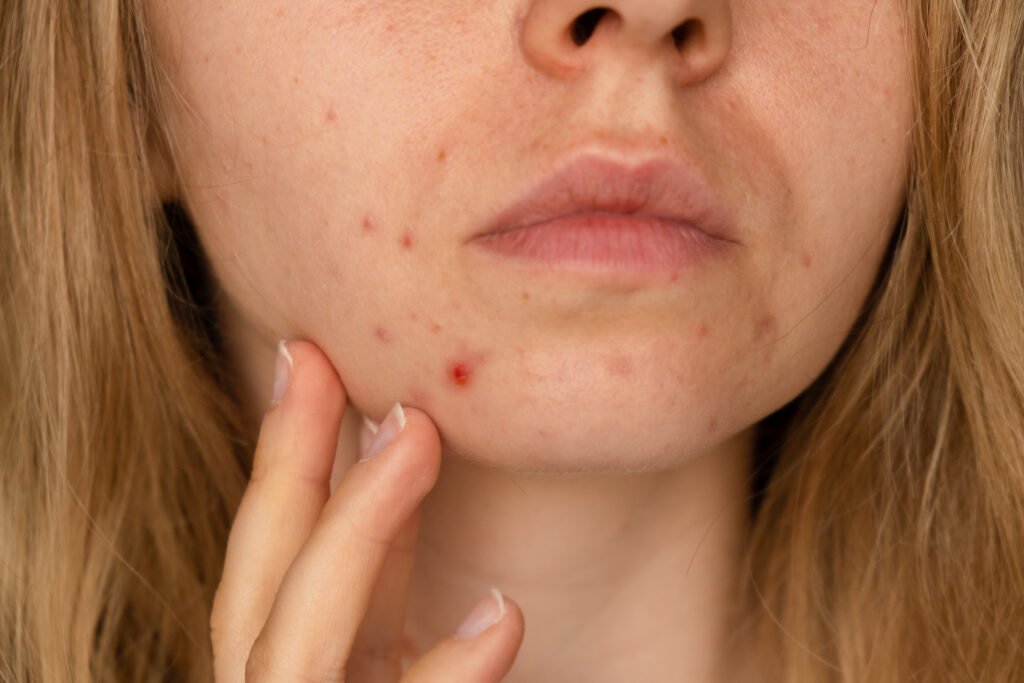
More and more people feel that skin problems can't be explained solely by external factors.
Acne that flares up during stressful times, rosacea that worsens with anxiety, itching with no clear cause…
And often, the right treatments don't quite solve the problem.
This is where integrative dermatology comes in.
In this article, I’ll explain what it really is, how it differs from conventional dermatology, and when it might be appropriate to use it.
What is integrative dermatology?
Integrative dermatology is an approach to treating skin conditions that takes into account not only the skin lesion but the person as a whole.
This includes:
- physical factors (skin, hormones, inflammation)
- emotional factors
- lifestyle
- personal context
It does not replace traditional dermatology, but rather expands upon it.
It offers a more comprehensive view.
How is it different from conventional dermatology?
Conventional dermatology focuses primarily on:
- diagnosis of the injury
- medication or topical treatment
- symptom management
And this is essential.
But in some cases, that's not enough.
Integrative dermatology raises a key question:
Why is this happening to this person right now?
The skin as a reflection of what lies within
The skin is connected to the nervous, endocrine, and immune systems.
This means that:
- Stress can make acne or rosacea worse
- Anxiety can make the itching worse
- Anxiety can make the itching worse
It’s not “psychological” in the sense that it’s imaginary.
It's just physiology.
When does an integrative approach make sense?
It isn't always necessary. But there are situations where it adds a lot of value.
1. When the problem is recurring
- outbreaks that come and go
- partial improvement with treatment
2. When there is no clear cause
- itching without visible lesions
- symptoms that are hard to explain
3. When context clearly plays a role
- gets worse with stress
- changes during life transitions
4. When the treatment isn't quite working
- temporary improvements
- frequent relapses
Common examples seen in practice
Some situations where this approach is often helpful:
- acne in adult women
- rosacea
- dermatitis
- hair loss
- itching with no apparent cause
In many of these cases, treating the skin alone is not enough.
What an integrative approach looks like in practice
It’s not about doing “a lot of things,” but about doing the right things.
The approach typically includes:
1. Comprehensive dermatological evaluation
Accurate diagnosis and appropriate treatment.
2. Context Analysis
- stress
- habits
- crucial moment
3. Treatment adjustment
Tailored to the individual, not just the diagnosis.
4. Support
Understanding what's going on helps reduce feelings of frustration.
What integrative dermatology is NOT
It's important to clarify this.
- It is not an alternative to medicine
- It’s not “just emotional”
- It does not replace necessary treatments
- It's medicine with a broader perspective
Benefits of this approach
When applied correctly, it usually provides:
- a better understanding of the problem
- more tailored treatments
- more consistent results
- fewer relapses
And something important: the feeling that someone understands what you're going through
A person-centered approach
Every piece of leather has a story.
And often, understanding that story is what allows us to move forward.
It’s not just about treating symptoms, but about:
- understand the origin
- adjust the treatment
- support the process
When should you see a doctor?
It may be worth considering this approach if:
- Your skin problem is persistent
- no improvement at all with standard treatments
- notes related to stress or your current life situation